
30-day glow up challenge
There’s something powerful about deciding to show up for yourself—consistently, intentionally, and with genuine care. Not because something is wrong with you, but because you deserve to feel good in your body, your skin, and your daily life.
That’s what this 30-day glow up challenge is about.
Not a dramatic overhaul. Nor a punishing regimen. Not a before-and-after transformation designed to make you feel inadequate about where you’re starting from. This is a month of small, meaningful daily practices across your skin, hair, oral health, inner nutrition, and confidence—all working together to help you feel more radiant from the inside out.
Thirty days is genuinely enough time to notice real change. Your skin cells turn over roughly every 28 days. Hair growth cycles respond to nutritional shifts within weeks. Confidence builds through repeated small actions that prove to yourself you’re worth showing up for. And habits that feel effortful in week one often feel natural by week four.
This challenge is designed to be sustainable—not something you white-knuckle through and abandon on day twelve. Each week builds gently on the last. You can adapt it to your schedule, your budget, and your current starting point. And you can come back to it as many times as you need.
Let’s begin.
Before You Start: Setting Your Glow Up Foundation
Before diving into the daily practices, a few minutes of intentional preparation will make the entire month more effective and more enjoyable.
Know your why. Take a moment—right now, before reading further—to ask yourself: why does this matter to me? Not the surface answer, but the real one. Is it about feeling more confident at work? Reconnecting with self-care after a difficult period? Building habits that support your health long-term? Your “why” becomes your anchor on days when motivation dips.
Start a simple tracking journal. You don’t need a beautiful planner or a fancy system. A notes app on your phone or a simple notebook works perfectly. Each evening, note what you did, how you felt, and one thing you noticed about your body or skin. This isn’t about grading yourself—it’s about building awareness and seeing your progress accumulate.
Take a baseline “before.” Photograph your skin (no makeup, natural light), note your current energy levels, how your hair feels, and how confident you feel on a scale of 1-10. Not for comparison or judgment—just so you have a clear before to look back on at the end of thirty days.
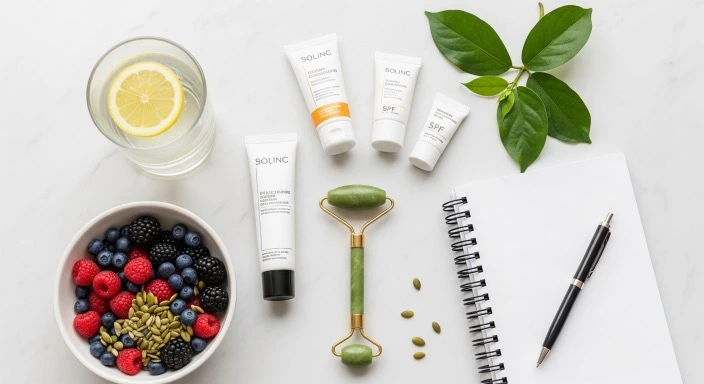
Gather your basics. You don’t need to buy everything at once. The essentials for this challenge are a gentle cleanser, moisturizer, SPF, a hair mask or nourishing oil, a quality toothpaste, a journal, and a water bottle. Most people already have most of these. Add items gradually as you identify what’s missing.
Release the all-or-nothing mindset. This is perhaps the most important preparation of all. If you miss a day—or several—the challenge doesn’t restart. You simply continue from where you are. Progress is not linear. A 70% consistent month beats a perfect week followed by abandonment every single time.
How This 30-Day Glow Up Challenge Is Structured
This challenge is organized into four weekly themes, each with daily anchor habits and one or two weekly focus practices. The weekly themes build progressively:
1st week : Cleanse and Reset — clearing the foundation across all pillars
2nd week : Nourish and Hydrate — feeding your skin, hair, and body from within
3rd week : Strengthen and Protect — building resilience in your skin barrier, hair health, and confidence
4th week : Glow and Maintain — consolidating habits and beginning to see cumulative results
Each week has a set of daily non-negotiables (simple, time-efficient practices you do every day) and weekly focus practices (slightly deeper practices you do 2-3 times that week).
The total daily time commitment is approximately 20-40 minutes, depending on how deeply you engage with each practice. Most of this time is already spent on daily hygiene—this challenge simply makes those existing moments more intentional and effective.
Week 1: Cleanse and Reset (Days 1–7)

The Philosophy of Week 1
Every glow up begins with clearing. This week is about establishing clean foundations—removing buildup from your skin and scalp, clearing processed foods and excess sugar from your diet, reducing digital noise that clutters your mind, and creating space for the nourishing habits that follow.
Think of it as pressing a gentle reset button rather than a dramatic detox. Nothing extreme. Just a conscious clearing of what’s been accumulating.
Week 1 Daily Non-Negotiables
Morning:
Start each morning by drinking 16 ounces of water before anything else. This simple habit—explored in detail in our morning routine for confidence guide—sets the hydration tone for your entire day, supports skin plumpness, and helps your body flush overnight metabolic waste. Keep a large glass by your bed the night before so there’s no friction in the morning.
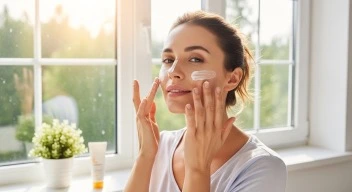
Follow with a two-minute gentle face cleanse using lukewarm water and a mild, fragrance-free cleanser. Pat dry with a clean towel (not rubbed—rubbing creates unnecessary friction on delicate facial skin). Apply a lightweight moisturizer and SPF 30 or higher. This three-step routine takes under five minutes and is the non-negotiable foundation of skin health for this entire month.
Evening:
Cleanse your face again in the evening to remove the day’s SPF, environmental pollutants, and any makeup. This is non-negotiable—skin regenerates overnight, and it can’t do this effectively through a layer of unremoved sunscreen and oxidized sebum. Apply a slightly richer moisturizer before sleep.
Before bed, spend two minutes doing a gentle scalp massage. Use your fingertips (not your nails) to apply light circular pressure across your entire scalp for 1-2 minutes. Emerging research, including a pilot study published in ePlasty, suggests that consistent scalp massage may improve hair thickness over time by stretching dermal papilla cells. Beyond the physical benefits, it’s genuinely relaxing—a perfect wind-down ritual.
Throughout the day:
Aim for 8 glasses of water. Set a reminder on your phone if needed. Drink one cup of green or spearmint tea. Spearmint tea has emerging evidence for reducing androgen levels, which benefits both hormonal skin and hair health—and it’s a soothing, accessible daily ritual.
Week 1 Weekly Focus Practices (Do 2–3 Times This Week)
Clarifying hair cleanse: Use a gentle clarifying shampoo or baking soda rinse (1 tablespoon dissolved in one cup of water, applied to scalp before shampooing) to remove product buildup from your scalp. Buildup blocks follicles and dulls hair’s natural shine. Follow with a deep conditioning mask left on for 5-10 minutes. This once-weekly practice sets the stage for healthier hair growth and shine throughout the month.
Digital sunset: For at least three evenings this week, put your phone away 60 minutes before bed. Chronic screen exposure before sleep disrupts melatonin production, reduces sleep quality, and elevates cortisol—all of which directly affect skin and hair health. Replace those 60 minutes with reading, journaling, gentle stretching, or simply resting. Notice how your sleep quality and morning mood shift.
Kitchen cleanse: Go through your kitchen and identify the two or three foods you know trigger inflammation or blood sugar spikes for you—likely ultra-processed snacks, sugary drinks, or refined white carbs. You don’t need to eliminate them permanently, but for this week, consciously reduce them and notice the effect on your energy and skin.
Week 2: Nourish and Hydrate (Days 8–14)

The Philosophy of Week 2
With your foundations cleansed and reset, week two is about filling yourself up—with nutrients, hydration, rest, and self-compassion. This is the week where inner nourishment becomes the focus, because genuine glow comes from within far more than it comes from topical products.
Week 2 Daily Non-Negotiables
Nutrition focus:
Add at least one hormone-balancing food to each main meal this week. Drawing from our in-depth guide on hormone-balancing foods for glowing skin, this means incorporating foods like fatty fish, avocado, berries, pumpkin seeds, cruciferous vegetables, flaxseeds, and sweet potatoes into your daily eating.
You’re not overhauling your diet—you’re ADDING:
-a handful of pumpkin seeds to your morning oatmeal.
– half an avocado to your lunch.
-a small bowl of berries as an afternoon snack.
These small additions compound across a week into meaningful nutritional support for your hormones, skin, and hair.
Eat a protein-containing breakfast every single day this week. Protein is essential for hair growth, skin collagen production, and stable blood sugar—all of which directly affect how your skin and body look and feel. This doesn’t need to be elaborate: eggs, Greek yogurt, a protein smoothie, or smoked salmon on whole grain toast all count.
Skincare nourishment:
Introduce a serum or treatment product this week if you haven’t already. The most universally beneficial options for glow are vitamin C serum in the morning (for brightening and antioxidant protection) and niacinamide in the evening (for pore appearance, oil regulation, and skin barrier support). You don’t need both—choose one that addresses your main skin concern and use it consistently.
Body hydration:
Increase your water intake by one additional glass daily this week. If you hit eight glasses in week one, aim for nine this week. Your skin is approximately 64% water, and even mild dehydration visibly affects its plumpness, bounce, and glow. For variety, add cucumber slices, mint leaves, or frozen berries to your water.
Week 2 Weekly Focus Practices (Do 2–3 Times This Week)
Hair oiling treatment: Apply a nourishing oil to your hair 2-3 times this week before washing. Coconut oil, argan oil, rosehip oil, or castor oil (especially on the scalp for growth support) all work well depending on your hair type. Apply to damp or dry hair, focusing on mid-lengths and ends, and leave for 30-60 minutes before shampooing. This weekly practice dramatically improves hair moisture, reduces breakage, and adds the kind of shine that comes from genuine hydration rather than product coating.
Gratitude journaling: Each evening this week, write down three specific things you appreciate about your body. Not “I’m grateful for my health” (too abstract)—but genuinely specific things:
“I’m grateful that my legs carried me up the stairs today.”
Or “I’m grateful that my skin is healing the breakout from last week.”
“I’m grateful that my hair smells clean and fresh.”
This practice shifts your internal narrative about your body from critical to appreciative—and this shift in self-perception is one of the most powerful confidence builders available to you.
Oral nourishment ritual: Begin oil pulling three mornings this week. Swish one tablespoon of coconut oil for 10-15 minutes before brushing. As explored in our teeth whitening at home guide, oil pulling supports gum health, reduces harmful oral bacteria, and contributes to a cleaner, fresher smile over time. It also makes your morning feel luxuriously intentional.
Week 3: Strengthen and Protect (Days 15–21)
The Philosophy of Week 3
By week three, your foundations are cleaner and your body is receiving better nourishment. Now it’s time to build resilience—strengthening your skin barrier against environmental stress, protecting your hair from damage, and fortifying your confidence through embodied practices that remind you of your capability and worth.
Week 3 Daily Non-Negotiables
Skin barrier protection:
This week, focus specifically on your skin barrier—the outermost layer of skin that protects against moisture loss, environmental damage, and irritants. A compromised skin barrier is the root cause of dullness, sensitivity, redness, and accelerated aging.
Add a barrier-supporting ingredient to your routine. Ceramides, fatty acids, and cholesterol are the primary components of a healthy skin barrier. Look for these in your moisturizer or a dedicated barrier repair cream. Apply immediately after cleansing while skin is still slightly damp to lock in moisture most effectively.
Apply SPF every single day, even if you’re indoors or it’s cloudy. UV radiation is the single biggest external cause of premature skin aging, hyperpigmentation, and barrier damage. According to the Skin Cancer Foundation, up to 80% of UV rays penetrate cloud cover, and glass windows don’t block UVA rays. Daily SPF use is non-negotiable for any glow journey.
Stress management:
Add a 10-minute intentional stress management practice to each day this week. Chronic stress elevates cortisol, which disrupts hormones, triggers breakouts, accelerates skin aging, and slows hair growth. Your practice might be a 10-minute walk, five minutes of deep breathing, a short guided meditation, or even five minutes of quiet sitting without your phone.
Research published by the American Psychological Association consistently shows that even brief daily stress management practices produce measurable reductions in cortisol over time. You don’t need an hour of meditation—you need consistent, daily, brief moments of intentional calm.
Hair protection:
Reduce heat styling to two or fewer times this week. When you do use heat, apply a quality heat protectant spray first and keep temperatures below 375°F (190°C). Switch to a microfiber towel or an old cotton t-shirt for drying hair—regular terry cloth creates significant friction that causes breakage and frizz. Sleep on a silk or satin pillowcase if possible—the reduced friction dramatically decreases overnight breakage, particularly for curly or textured hair.
Week 3 Weekly Focus Practices (Do 2–3 Times This Week)
Full body exfoliation and moisturization: Two to three times this week, use a gentle body scrub or dry brush before your shower, followed by thorough application of body moisturizer immediately after bathing (while skin is still damp). This stimulates circulation, removes dead skin cells that contribute to dullness, and gives you an opportunity to practice genuine body appreciation—touching your own skin with care and kindness rather than criticism.
Confidence mirror work: For two to three mornings this week, stand in front of your mirror during your skincare routine and say two to three affirmations out loud. As we explored in our morning routine for confidence article, speaking affirmations aloud while making eye contact with yourself activates neural reward pathways and builds genuine self-perception over time. Choose affirmations that feel true and supportive: “I am becoming healthier every day.” “My body is working hard for me.” “I am worth this care and attention.”
Anti-inflammatory meal day: Choose one day this week to eat entirely anti-inflammatory. Every meal includes leafy greens or cruciferous vegetables, a source of omega-3 fats, no refined sugar, and plenty of fiber. One fully anti-inflammatory day helps you experience how your body—and skin—feels when inflammation is minimized, and builds awareness about the food-skin connection.
Week 4: Glow and Maintain (Days 22–30)

The Philosophy of Week 4
You’ve been doing this for three weeks. You’ve established cleansing rituals, nourished from within, strengthened your defenses. Week four is where you begin to consolidate—noticing what’s working, deepening the practices that feel most meaningful, and beginning to think about how to carry these habits beyond the 30 days.
This week is also where many people first see meaningful visible results. Your skin has been through nearly a complete cell turnover cycle. Your hair has been receiving better nutrition and gentler handling for three weeks. The cumulative effect of small daily actions is becoming visible.
Week 4 Daily Non-Negotiables
Maintain all foundational habits:
Continue your morning water, twice-daily gentle cleansing, moisturizer and SPF, evening scalp massage, protein-inclusive breakfast, hormone-balancing foods, and daily stress management practice. By week four, many of these should feel less like effort and more like normal—a sign that habits are forming.
Introduce one targeted treatment:
Based on what you’ve observed about your skin over the past three weeks, introduce one targeted treatment product this week. Options might include a retinol serum (start 2-3 nights per week for anti-aging, cell turnover, and acne support), an azelaic acid treatment (for hyperpigmentation and residual hormonal acne), or a brightening vitamin C serum if you haven’t already added one.
The key is one new addition—not five. Your skin responds best to gradual introduction of new actives, and introducing too many at once makes it impossible to know what’s working.
Sleep optimization:
Make 7-9 hours of quality sleep an absolute priority this week. Sleep is when your body produces growth hormone (essential for skin and hair cell repair), when cortisol resets to baseline, and when your skin barrier restores itself. Research from the University of California found that even one night of poor sleep significantly reduced skin barrier function, increased water loss through skin, and slowed healing of minor skin damage.
Protect your sleep this week: consistent bedtime, cool and dark room, no screens 30-60 minutes before bed, and a brief relaxation practice to signal your nervous system that it’s safe to rest.
Week 4 Weekly Focus Practices (Do 2–3 Times This Week)
Glow progress review: Take a few moments to compare your current skin photos and journal notes with your baseline from day one. Notice what has genuinely changed—not with a critical eye, but with genuine curiosity and appreciation. What habits had the most impact? Which ones felt most natural? Which would you keep indefinitely?
Lymphatic facial massage: Two to three times this week, incorporate a 3-5 minute facial massage into your evening skincare routine. Using clean hands or a jade roller, work in gentle upward and outward strokes from the center of your face outward, and from your jaw up toward your temples. This stimulates lymphatic drainage, reduces morning puffiness, improves circulation to facial tissues, and genuinely feels luxurious. Apply your facial oil or serum before massaging to reduce drag on skin.
Plan your maintenance month: Spend 20 minutes this week writing down the 5-8 habits from this challenge that you want to carry forward permanently. Be realistic—not all thirty daily practices need to continue forever. Identify your non-negotiables (the habits that made the biggest difference) and create a sustainable daily routine built around them. This is how a 30-day challenge becomes a lifestyle.
The Daily Glow Up Checklist: Your Complete At-a-Glance Reference
Here is everything in this challenge organized as a simple daily reference. Pin it, screenshot it, write it in your journal—whatever makes it easiest to use.
Every Morning: Drink 16 oz of water immediately upon waking. Follow with a gentle 2-minute face cleanse. Apply moisturizer and SPF. Eat a protein-containing breakfast. Drink one cup of green or spearmint tea. Set one intention for the day.
Every Evening: Cleanse your face again. Apply your evening skincare (moisturizer, any active treatments). Do a 2-minute scalp massage. Drink a final glass of water. Spend 5 minutes in your journal or with a gratitude practice. Limit screens in the 30-60 minutes before sleep.
Throughout Each Day: Aim for 8+ glasses of water. Include at least one hormone-balancing food per meal. Move your body gently for at least 10 minutes. Practice one brief stress management moment.
Weekly Additions by Week: 1st Week : Clarifying hair cleanse, digital sunset evenings, kitchen awareness. 2nd Week : Hair oiling treatments, gratitude journaling, oil pulling mornings. 3rd Week : Full body exfoliation, confidence mirror work, anti-inflammatory meal day. 4th Week : Glow review, lymphatic facial massage, maintenance planning.
What You Might Notice: A Realistic Week-by-Week Progression
Knowing what to expect helps you stay patient and encouraged when results aren’t immediate.
After Week 1: You’ll likely notice improved energy from better hydration, slightly less morning puffiness from reduced salt and processed foods, and a feeling of greater clarity and intention in your mornings. Skin may not look dramatically different yet, but it may feel cleaner and more comfortable. Your scalp may feel refreshed from the clarifying treatment.
After Week 2: Skin begins to look more hydrated and even. The early signs of improved nutrition—better energy, more stable mood—become noticeable. Hair may feel softer and more manageable from the oiling treatments. Some people notice reduced breakouts as blood sugar stabilizes and hormone-balancing foods begin to influence the internal environment. Your confidence journaling practice may begin shifting how you talk to yourself.
After Week 3: This is often when people first notice others commenting on their skin. The combination of consistent cleansing, active ingredients, improved nutrition, and stress management is becoming visible. Hair may show improved shine and reduced breakage. Confidence practices are beginning to feel more natural—affirmations that felt awkward in week one may start feeling genuine.
After Week 4: The cumulative effect of 30 days of consistent self-care becomes most apparent here. Skin has completed nearly a full cell turnover cycle on better nutrition and more careful treatment. Hair has been handled gently and nourished for a month. Your morning routine feels established rather than effortful. The confidence you’ve been building through consistent self-showing-up has a different quality—quieter, more grounded, and more genuinely yours.
Troubleshooting Common Challenges
“I keep forgetting my evening routine.” Stack your evening skincare onto an existing habit—right after brushing your teeth, or immediately after getting into bed. The more you attach new habits to existing routines, the less mental effort they require. A simple sticky note on your bathroom mirror can also be surprisingly effective.
“My skin looks worse in week one.” This is common and usually temporary. Introducing new products, improving circulation through massage, and dietary changes can trigger a brief adjustment period. If a new product is causing significant irritation (redness, burning, or breakouts in unusual areas), discontinue it. If it’s general purging (breakouts in your typical problem areas), give it 2-3 weeks before assessing.
“I’m too tired for the evening practices.” Simplify. On exhausted evenings, your non-negotiables are cleansing your face (never skip this) and drinking a glass of water. Everything else is optional. A 30-second scalp massage still counts. A one-sentence journal entry still counts. Showing up imperfectly is infinitely better than not showing up.
“I’m not seeing results and feeling discouraged.” Zoom out. Take your week two photos and compare them to your baseline. Read your earliest journal entries. Results in skin, hair, and confidence are often gradual enough that you don’t notice them day to day—but comparing week one to week three often reveals meaningful changes you’ve stopped seeing because you’re looking every day.
“I’m eating well but my skin isn’t clearing.” Dietary changes take time—often 6-8 weeks before the full effect on skin becomes visible. If hormonal acne is your main concern, our comprehensive guide on how to get rid of hormonal acne naturally provides deeper strategies specifically targeting the root hormonal causes. Thirty days of dietary improvement is the beginning, not the complete answer.
Building Your Glow Life Beyond Day 30
The most important thing about a 30-day challenge is what happens on day 31.
A challenge has value—the structure, the momentum, the clear starting point all make it easier to begin new habits. But the real goal was never to complete 30 days. The real goal is to discover which practices genuinely nourish you, then integrate them into your normal life in a way that’s sustainable for months and years.
Some practices from this challenge might become daily non-negotiables for you forever—morning hydration, twice-daily cleansing, a protein breakfast. Others might be weekly rituals you maintain—hair oiling, anti-inflammatory meal days, a digital sunset evening. Some you might do seasonally or as needed.
Research on habit formation from University College London suggests that habits take an average of 66 days—not the often-cited 21 days—to become automatic. What this means practically is that the 30-day challenge plants the seeds, but it’s the weeks and months that follow where those habits truly take root.
Be patient. Be kind to yourself. And remember that a glow up isn’t a destination you arrive at—it’s a direction you consistently move in.
The Bottom Line
This 30-day glow up challenge isn’t about becoming a different person. It’s about becoming more consistently yourself—more nourished, more cared for, more intentional about the daily practices that support how you feel and look.
Thirty days of cleansing thoughtfully, eating nourishing foods, moving gently, sleeping well, handling your hair with care, building your confidence through small daily actions, and showing up for yourself even on the imperfect days will produce real, visible, felt results. Not because any one practice is miraculous, but because consistency and accumulated care always show up in your skin, your hair, and your presence.
The glow you’re working toward isn’t primarily about how others see you. It’s about how you feel moving through your days—comfortable in your skin, confident in your choices, and genuinely at home in your body.
That glow is already in you. These thirty days are simply about creating the conditions for it to shine through.
Our Authority Sources
1. ePlasty — Scalp Massage and Hair Thickness Pilot Study
2. Journal of Happiness Studies — Gratitude and Wellbeing Research
3. Skin Cancer Foundation — Daily Sunscreen and UV Protection
4. American Psychological Association — Stress Management
5. NIH — Sleep and Skin Barrier Function
6. European Journal of Social Psychology — Habit Formation Research